


The Drumearn Trove: An Intriguing History
Beyond the endlessly fascinating and complex challenges that come with sympathetically restoring a building like Drumearn House, the project has also yielded a wonderful collection of heritage design features, materials, and curios from centuries past.
Much of this trove has been unearthed by our triumvirate of metal detector enthusiasts: Mattias, our project lead, Woody from Wood Bros in Comrie, and Jim, our local Parcelforce driver. Let’s see what treasures they’ve found...
Precious metals
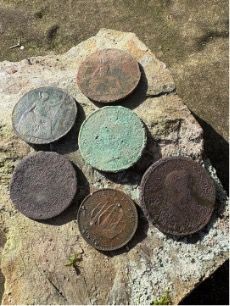
The ultimate goal of most metal detectorists is to unearth a glittering hoard of coins – and we’ve made an exciting, if modest, start.
We’ve found numerous coins so far in varied conditions: some have legible dates and figures, while others are worn smooth as pebbles. Of particular note is an 1870s penny with Britannia Seated on one side and a bust of Queen Victoria on the other. That the date aligns with the original extension of Drumearn House is a hugely pleasing coincidence. The previous owner’s loss is, after some delay, our gain.
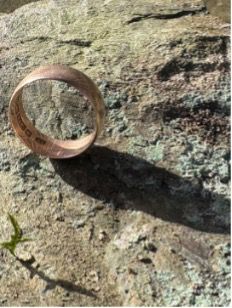
Jim’s favourite find so far is a striking gold ring from the 1800s. There are hallmarks stamped inside the band that could reveal more of the ring’s story, and we hope to have it assessed sometime in the future.
Hidden timbers
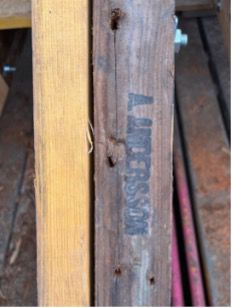
When restoring a historic building like this, nothing ever goes as expected. One of our most surprising discoveries of this year was finding two timber beams bolted together: one original from 1856, and the other newly installed in 2025.
Early research suggests that the original beam, stamped ‘A. Andersson.’, may have come from a Norwegian timber merchant exporting goods to Scotland from the Baltics. But what we loved most was how the timber was the perfect visual metaphor for our work so far: enduring craftsmanship, with the new supporting the old.
Decorative details
Among our favourite finds on site is a pair of Victorian-style ‘cloverleaf’ earbelts or brackets, which were salvaged from the original building. These ornate, cross-shaped pieces are used to fix downpipes to masonry – for example, on the exterior walls of Drumearn House
We’ve found multiple brackets on both the original house from 1856 and the 1870 extension, which we’ll have cleaned up and reinstalled down the line. We love the idea that the custodian who built this extension took the time to deliberately match the original ironmongery. It shows the kind of care and attention that we’re bringing to every aspect of the house’s restoration.
Everyday treasures
The best thing about growing this collection of trinkets is the range of items found. There are coat buttons, pocketknives, cutlery, even a die-cast toy car that must have been made more than a century after the house was built.
All of this reveals an interesting cross-section of everyday life at Drumearn House over the last 170 years. There are hints of wealth, but for the most part it’s the ordinary debris of a working household, not some hoard of vintage collectibles.
We plan for many of these artifacts to find their way back into the house in due course, and hope that they’ll be joined by many more curios from the estate’s past.

