


The Living Legacy of Drumearn's Woodland
The surrounding landscape of Dunearn House is shaped by the rich variety of tree species that have been planted here over many years. As well as an abundance of trees native to Scotland and characteristic of Perthshire woodland, we also have specimens originating from North America, Japan, and large parts of Asia. Let’s delve a little further into exactly what’s growing on the estate…
A proliferation of plantings
There are a few areas around Drumearn House where it’s clear that considerable care has been taken to create special plantings featuring rhododendron, holly, Italian maple, and Japanese maple. These arrangements would have been planted as far back as the mid-1800s when the house was first built. This was a period marked by a growing fascination with exotic species as wealthy Scottish estates drew on botanical networks to enrich their landscapes. While all these species are now relatively common in Scottish gardens, they would have been especially remarkable at the time.
Last year, Mattias had the pleasure of meeting Margaret McVicor in Comrie, who managed Drumearn House when it operated as the Abbeyfield nursing home. She shared stories about the residents, some of whom spent a great deal of time in the garden and planted several of the interesting ornamental species we see today.
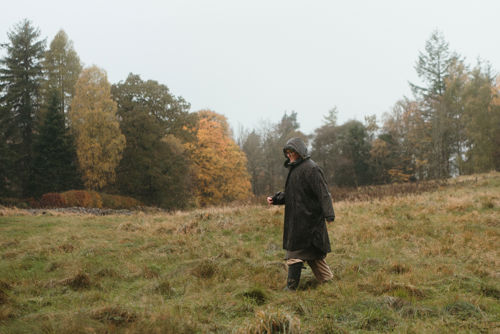
An abundance of yew trees
We're particularly proud of the yew trees on site, some of which are among the largest Mattias has encountered in his forestry career. Although yews can live to hundreds of years, yews were harvested to near extinction for longbow making from the 12th to 16th centuries, which makes the abundance around the estate quite special. Combined with the tree’s slow growth and poor natural regeneration, we’re lucky that these ancient giants have survived!
Some rather royal giants
Speaking of giants, some of the tallest trees at Drumearn House are North American species like Douglas firs and western red cedars. The land at Drumearn was once part of the neighbouring Aberuchill Estate, which was owned by the crown – as was Scone Palace, which is famed for its ancient trees.
Mattias believes that the original Douglas firs and cedar trees on the property may trace back to cones collected by Scottish botanist David Douglas during his expeditions to North America for the Royal Horticultural Society. After planting at Scone sometime after 1826, it's likely that they were later planted at Aberuchill, and eventually at Drumearn.
Evergreens and hornbeams
Our older Lawson cypress trees are a species that’s native to Oregon and California. While we don't have many mature examples on the property, a number were planted around 40 to 45 years ago as screening or hedging, which eventually grew beyond what the previous owners intended.
These were the first trees to be removed as part of Mattias’s management plan. You might have noticed if you walked past recently that the larger cypress specimens have been retained. With the surrounding growth cleared, their canopies now receive the light and space they need to continue thriving.
Beauty with every season
Because of the diversity of species on site, the grounds put on a striking display of colours throughout the year. Most of the conifers remain green or take on a golden tint in winter before returning to their lush, dark green in the summer months. The majority of our broadleaf, or deciduous, species, lose their leaves during the winter. The beech is a herald of spring, typically budding in late April or early May, when its bright green, silky leaves emerge. In Mattias’s childhood, these young leaves were considered a delicacy before they developed their waxy coating!
We also have several hornbeam trees of various sizes, though these are concentrated in a smaller area of The Ross. One of our neighbouring homes is even named Hornbeam Cottage! Mature hornbeams of the size found here are uncommon, as the species is typically planted as hedging because of its slow growth and ability to form a dense canopy.
A wonderland for wildlife
You might have spotted the magnificent copper beech that stands at the front of the house. In summer, its dark red canopy closes overhead, creating an almost mystical atmosphere for anyone standing beneath it. The height of its lower branches is largely due to browsing by the deer species that live in the grounds.
Over winter, a group of young stags, along with a few hinds and their calves, have also been tucking into the grass and scrub. Similarly, a small population of roe deer calls The Ross its home. Since we removed much of the rhododendron under the oak trees, the deer can now forage freely for fallen acorns, which provide an important source of carbohydrates and protein in winter.
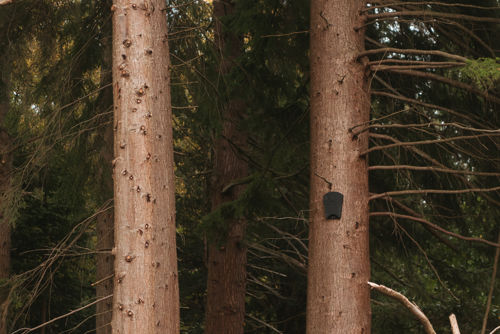
In fact, Drumearn House is home to a variety of wildlife, including cottontail rabbits, red squirrels, several ginger cats, and a pair of barn owls that hunt the surrounding fields at night. Last year, Mattias installed a breeding box for the owls with the hope of seeing a new generation take flight in the coming season.
As part of his tree management plan, Mattias has already provided Perth and Kinross Council with a restocking plan, which is typically one of the first steps required before any trees are removed. The plan includes native species as well as a small selection of fruit- and nut-bearing trees. Together, these will support strong biodiversity and provide multiple stages of blossom and foraging opportunities for insects, birds, and small mammals throughout the year.
So far, it’s been a privilege (albeit a challenge!) to show these once magnificent gardens some much-needed care and attention. Slowly but surely, we’re confident we’ll get them back to their blooming best!


